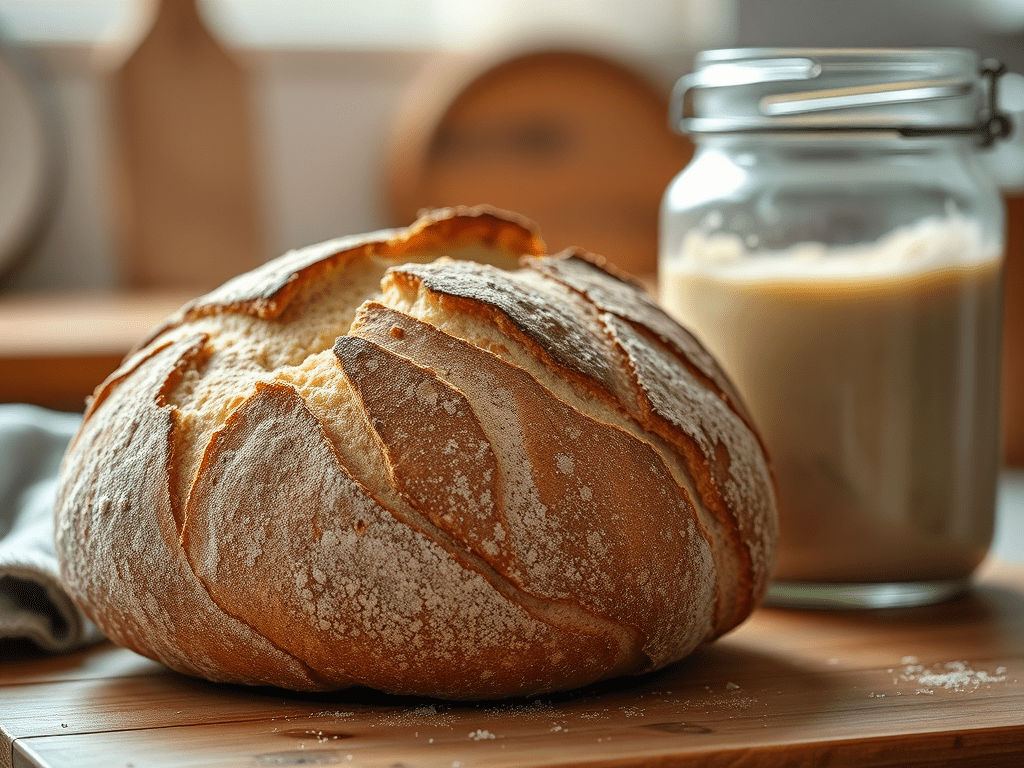
My sourdough journey began in January 2024, and let’s just say it’s been a journey. After a slightly traumatizing first attempt (think red mold and a weekend counter-top disaster), I’m back and baking better than ever. I’ve successfully nurtured a new starter and have been turning out a delicious loaf a week, each one surpassing the last.
But in my quest for the perfect sourdough, I’ve noticed something: it’s all so complicated. Humans have been making leavened bread for thousands of years. So why do we need a mountain of gadgets and a dedicated weekend just to get a loaf on the table? In this post, I’m cutting through the sourdough clutter and simplifying the process of creating a starter. Don’t be intimidated – if our ancestors could do it, so can we.
What is a sourdough starter?
The first step is understanding what sourdough starter is and it’s role in the bread making process. A sourdough starter is a living, fermented mixture of water and flour that is used to leaven bread. It’s a culture of wild yeasts and bacteria. The starter is what gives sourdough bread its tangy flavor and unique nutritional benefits. It’s also what makes the bread rise. You’ll notice that sourdough bread recipes do not require active yeast – the starter does all the work!
What do I need?
Here’s what you need to make a sourdough starter: Organic flour, filtered water, two 32oz jars and a food scale (optional). As a health coach, I’m advising you to buy organic flour. If you’re investing the time and effort to make bread at home, choose the best ingredients! While not required, I prefer my sourdough without toxic pesticides. Filtered water is also key, as the chlorine found in tap water can hinder the bacterial growth crucial for a thriving stater.
I use two 32 oz mason jars, rotating between them for easy maintence and cleanup. I’ve found this size gives the starter enough room to grow without taking up too much counter space. A food scale, while optional, makes measuring precise and simple. Baking is a science and you want to be exact!
Here are the links to the sourdough tools that I find most helpful, including my preferred flour.
What is a feeding?
Sourdough starter is a living organism that must be fed to stay healthy and active. A feeding is simply adding equal parts flour and filtered water (by weight) to your starter. A food scale makes this precise and easy.
Before each feeding, discard almost half of your starter. This supports a balanced and robust culture of yeasts and bacteria. You can throw your discard in the trash – do not put it down the drain! I use the discard to make tortillas, crackers, pitas, cookies and more. I’ll post those recipes soon.
I usually feed my starter with 50 grams of flour and 50 grams of water, discarding 50 grams of the inactive starter. I bake every week so I keep it on my counter and do small feedings every 24 hours.
When is the starter active?
Your starter is active when it’s bubbly and doubles in size after a feeding. It can take a few weeks for your starter to mature and become active. Premature starter will leave you with flat, dense bread. Before you use the starter, perform a float test to see if it is active. If the starter floats in water, it’s ready to bake.
How to store and maintain an active starter
Once active, keep feeding your starter every 12 to 24 hours. If you don’t plan on using your starter every week, store it in the fridge. When you’re ready to bake, take it out of the fridge, let it warm up to room temperater and then feed it.
The bottom line
Creating a sourdough starter simply takes time and patience. Once you have a mature and active starter, you can continue using and feeding it for years. I’m already picturing my starter becoming a cherished family heirloom. I’ll be sharing my active sourdough starter and discard recipes soon, so you can begin your own family’s sourdough tradition.
Meal Planning Around My Sourdough Schedule
Sourdough is a cornerstone of my kitchen. I love the control I have over ingredients, using only clean, organic flour to create fresh, healthy loaves. It’s a weekly staple, appearing on our table in many forms. I pack my boyfriend a sourdough sandwich in his lunch almost daily, and I often pair our protein bowls with a slice of sourdough and grass-fed butter. For my own lunch, sourdough toast topped with cottage cheese is a daily essential. To ensure I always have a fresh loaf when I need it, I rely on this Weekly Meal Planner. It helps me schedule out dinners and lunches around my grocery shopping and sourdough timing. Check it out on my Etsy!




 Howe to Health
Leave a comment