There’s a moment many of us hit where the usual routines stop working. You’re still showing up, still checking boxes, still getting through the day, but something feels off. Not dramatic, just… disconnected. Like you’re operating slightly outside of yourself.
That’s usually the point where “self-care” gets recommended. But real self-care isn’t a bath, a candle, or a one-off Sunday reset. It’s a return to baseline. A structured way to notice what’s off, what’s missing, and what actually needs attention.
That’s exactly where a self-care reset becomes powerful.
The problem with modern self-care
Self-care has become a bit of a catch-all. It often gets reduced to quick fixes: rest when you’re burned out, hydrate when you feel depleted, take a break when you’re already overwhelmed.
But most of the time, we don’t notice the imbalance until it’s already loud.
What’s missing is structure. Something that helps you step out of autopilot and actually see your patterns before they turn into burnout, emotional fatigue, or decision exhaustion.
A reset isn’t about doing more self-care. It’s about doing it with awareness.
What a “reset” actually means
A reset is not a reinvention. It’s not becoming a different person or overhauling your life in 30 days.
It’s a guided return to clarity across a few core areas:
- How you’re taking care of your body
- How you’re managing your energy
- How you’re speaking to yourself
- How you’re showing up in your relationships
- How aligned your daily habits feel with your bigger goals
Most people don’t need more motivation. They need reflection that actually leads somewhere.
That’s what makes journaling so effective. It slows everything down enough for honesty to surface.
Why journaling changes everything
When you write things down, you stop negotiating with your thoughts and start observing them.
Instead of “I feel off,” you start noticing:
- I’ve been skipping meals without realizing it
- I feel more drained after certain interactions
- My routines look productive but don’t actually support me
- I haven’t had a real check-in with myself in weeks
Those patterns don’t usually show up in your head, they show up on paper.
And once you can see them clearly, you can actually change them.
A 30-day structure creates momentum (not pressure)
One of the most effective ways to create lasting change is through repetition without overwhelm.
A 30-day reset works because it gives you:
- Enough time to notice patterns
- Enough structure to stay consistent
- Enough flexibility to adapt as you go
Each day becomes a small check-in rather than a performance. You’re not trying to “do it perfectly.” You’re building awareness over time.
That’s where transformation actually happens, not in big dramatic shifts, but in small daily realignments.
What the Self-Care Reset Journal is designed to do
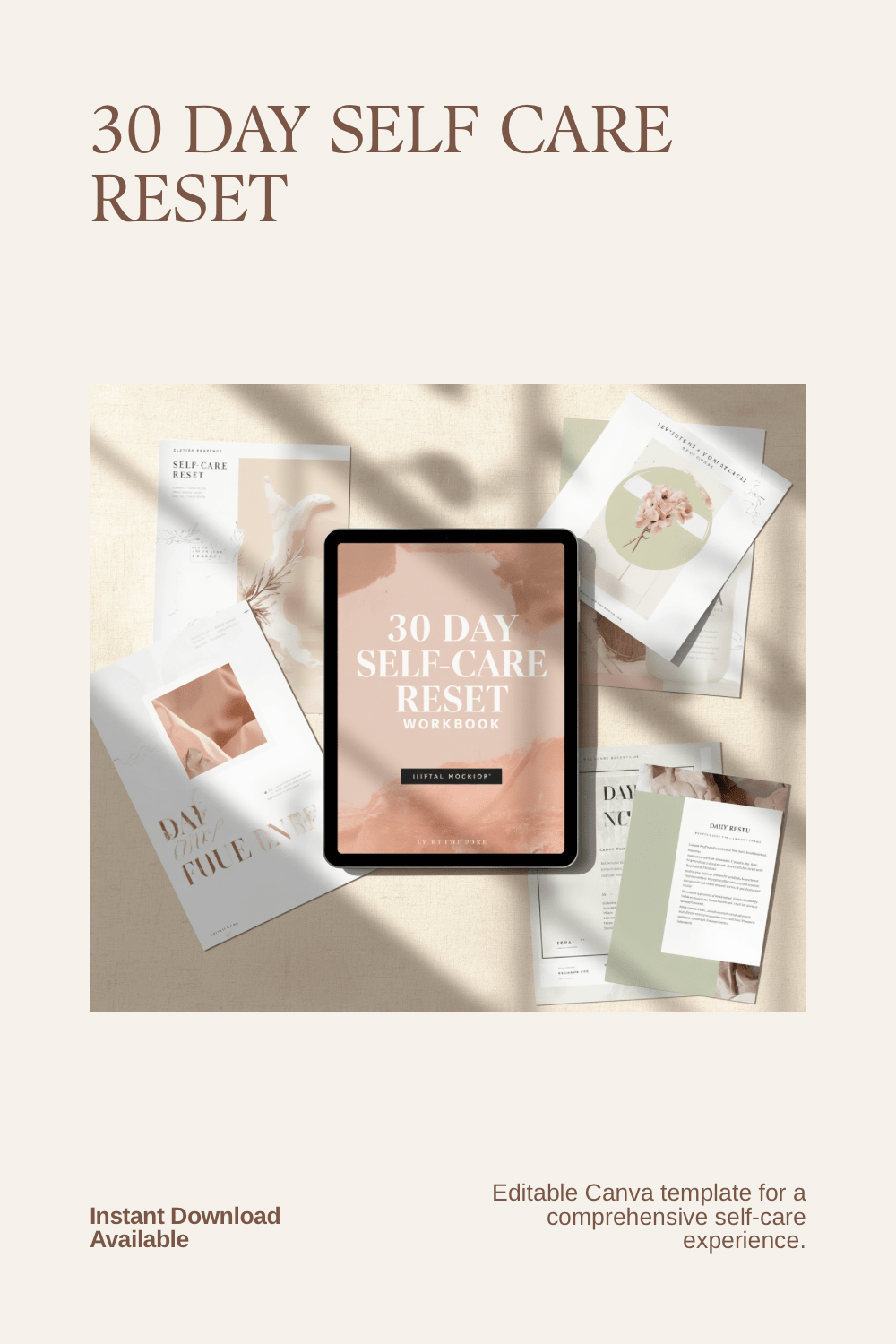
The 30-Day Self-Care Reset Journal was created for exactly this kind of recalibration.
Instead of overwhelming you with rules or rigid routines, it guides you through intentional daily prompts and structured reflection that help you:
- Reconnect with your physical and emotional needs
- Identify energy leaks and burnout patterns
- Build routines that actually feel supportive
- Strengthen self-awareness without judgment
- Create sustainable habits that extend beyond 30 days
It’s not about becoming a “perfectly balanced” version of yourself. It’s about understanding what balance actually looks like for you.
Self-care that lasts beyond the journal
The real goal of a reset isn’t what happens during the 30 days, it’s what changes after.
By the end, most people notice they’re:
- More aware of their triggers and habits
- Better at recognizing when they need rest before burnout hits
- More intentional with how they spend their time and energy
- Less reactive, more grounded in daily decisions
That’s the shift: self-care becomes less of a reaction and more of a rhythm.
If you’ve been feeling off, this is your sign to recalibrate
You don’t need to wait for burnout to justify a reset. You don’t need to earn rest or clarity.
Sometimes the most productive thing you can do is pause long enough to understand what’s actually going on beneath the surface.
A reset isn’t about doing more. It’s about coming back to yourself in a way that feels sustainable.
 Howe to Health
Leave a comment